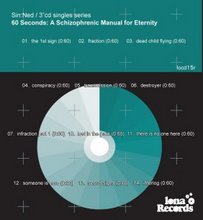
What shall we do with 60 seconds? If 60 seconds is all that is left, what shall we do with such short period of time? How significant can 60 seconds be?
How do we value something? Do we count, simply by the length of its existence?
We are so used to the model of expansion that, we lost sight of the small things in our life. Such as, 60 seconds of our life.
We are shaped by time, bounded by time, and we are running against time. Faster and faster…we never stop the race with time. Faster machines to shorten the time of travel, stronger chemicals to combat the trace of time on our body, and more advanced technology to get the job done in split second.
And during the race, we lost touch with the beauty of such small things in our life, as 60 seconds.
We call a good piece of song “evergreen”, a magnificent work of art “timeless”. Even our use of language reveals our obsession with eternity, that which we think, can resist the erosion of time. The non-existence of time. Someone from the east calls this nirvana. Or what Plato called, the world of Idea.
If only we can turn back time, to extend time to its infinity…if only we can get out of “time”.
But we are racing with ourselves, since we are the one who created time.
How do we know “we are”? “I think therefore I am”. That was the answer from Descartes. May be Descartes was right, but what is this process that we call thinking?
Thinking is creating. God created the world by words, and we create the world through thinking. According to the Buddhists belief, all things physical is simply the creation of our mental activity. Our understanding of the world, and our belief in the concrete existence of our “self”, all these are simply our own creation.
With time, we are able to confirm the concrete existence of our “self”. Time is the invisible string that links up the broken pieces.
We can never step into the same river twice. Claimed by the Buddhists. But why? That’s because the river we step into now, is not exactly the same river we just stepped into a moment ago. What we call the river is a just a series of moments linked together by time. It is simply a constant flux of changes. It is our sense of time that creates the illustration of that thing known to us as reality.
It is that moment, or even the moments in between moments that we have missed.
Our understanding of our “self” could be the same. We think we are, but we failed to see that we are nothing more than slices of moment linked together by time. Through time, we are.
It is not very different from Hume’s observation. If cause and effect, as he believed, is only a habit of us seeing events followed one by another, our conception of our “self” could also be another habit of ours.
We are so used to it that we lost our sensibility to the essence of life, such as those small insignificant things.
We are created by time and we are limited by time.
I guess you have already noticed that we are going in circle here. Yes, we are trapped.
In theory, if we disrupt the working of time, we will be able to free ourselves from our rigid concept of our “self”, of our “reality”.
Eternity is not just an extension of time.
We are not going to free ourselves from time, just by extending the deadline.
No one knows this better than artists, as artists are the alchemists of time.
And creation is the key.
We cut time up and we re-arrange time. We challenge the ways we look at time, and through such restructuring of time, we re-create the world. Musician works magic by turning split second of sound into a universe, while transcending a whole world through a short piece of sound. Visual artist do the same with visual elements.
The medieval alchemist works with the mind through transmutation of metals, and modern artists, through transmutation of time.
We capture the essence of life by capturing small slices of time. We turn a small slice of time, into the light of eternity, the same way we created time.
Or shall we say, we are also shaman of post-modern time, saving lost souls from the underworld. We are set to rediscover our souls, by revitalizing our consciousness of those lost moments.
One day, when we come to the end of our time, and if we say to ourselves: “I am proud not because I have lived this long, nor because I have gone this far. It is simply because I have fully lived every single moment of my life, and I have seen the beauty of eternity in those fleeting moments ” By then, we are enlightened.
So here we are, with our fleeting moments, waiting to be enlightened.
(Introductory text originally written for the internet audio/visual project "60 Seconds" organized by
Sleepatwork)
 眾聲平等。
眾聲平等。



 Posts
Posts